By Tangier Special Tours
There are cities you visit, and then there are cities that visit you. Tangier is the latter.
Perched on the edge of the Strait of Gibraltar, where the Atlantic Ocean meets the Mediterranean Sea, Tangier has always been a place of transition. It is the gateway to Africa, a spot where you can look across the water and see the shores of Spain. But beyond its strategic location, Tangier is a city of legends, spies, writers, and merchants.
For centuries, it has been a meeting point for cultures, religions, and empires. Today, it remains one of the most fascinating destinations in Morocco. It is chaotic and calm, modern and ancient, all at once. If you are planning a trip to Northern Morocco, Tangier is the perfect place to start your journey.
A History of Intrigue: The International Zone
To understand the vibe of Tangier, you must understand its unique history. From 1923 to 1956, Tangier was an International Zone. It was not fully controlled by Morocco, Spain, or France, but rather governed by a consortium of nations.
This status made it a haven for spies, smugglers, bankers, and artists. During the mid-20th century, it became a playground for the rich and famous, as well as a refuge for beat generation writers like William S. Burroughs and Jack Kerouac. The legacy of this era is still visible in the architecture, the cosmopolitan attitude of the locals, and the numerous old hotels and cafes that line the streets.
Key Sights in the City
Tangier is a city best explored on foot, with plenty to see within walking distance.
The Kasbah: The old citadel sits high above the city. Today, it houses the Kasbah Museum, which displays artifacts from prehistoric times to the 19th century. The gardens outside offer stunning views over the Medina and the port.
The American Legation Museum: This is a unique site. It was the first American public property outside the United States, gifted to the US by the Sultan of Morocco in 1821. It now serves as a museum and cultural center celebrating the long history of friendship between the two nations.
The Medina: The old walled city is a labyrinth of narrow streets. Unlike the Medinas of Fes or Marrakech, Tangier’s is more open to the sea breeze. You will find markets selling spices, leather, and textiles, as well as hidden courtyards.
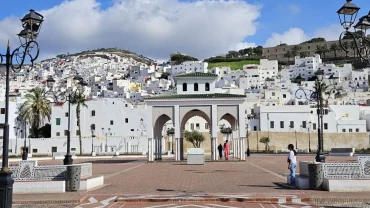
Grand Socco and Petit Socco: These are the two main squares that connect the new city to the Medina. The Grand Socco is a large circular plaza, while the Petit Socco is a smaller, intimate square famous for its cafes. It was once a meeting point for spies and informants, and today it remains a great spot for people-watching.
The Corniche: For a change of pace, walk along the waterfront promenade. It is lined with cafes and offers beautiful views of the port and the bay. It is especially lively in the evenings when families come out to stroll.
Day Trips from Tangier
While the city itself deserves a few days, it is also the perfect base for exploring the surrounding region.
Hercules Cave and Cape Spartel: Located just 14 kilometers west of the city, this is the most popular day trip. You can see the cave shaped like the continent of Africa and visit the lighthouse at the northwesternmost point of the continent.
Asilah: A charming coastal town about 45 minutes south by train. Asilah is known for its white-washed walls, blue accents, and annual arts festival. It is much quieter than Tangier and perfect for a relaxed afternoon.
Tetouan: As mentioned in our previous guide, the White Dove is only an hour away. It offers a deeper dive into Andalusian history and a UNESCO-listed Medina.
Practical Tips for Visiting Tangier
Getting There: Tangier is very accessible. You can take a high-speed train (Al Boraq) from Casablanca in just over two hours. Alternatively, ferries arrive daily from Tarifa and Algeciras in Spain. The Ibn Battouta Airport serves international flights from Europe and major Moroccan cities.
Currency: The Moroccan Dirham (MAD) is the local currency. ATMs are widely available in the new city. In the Medina, cash is preferred.
Language: Arabic and Berber are the official languages. French is widely spoken in business and tourism. Due to the proximity to Spain and history, Spanish is also very common. English is understood in most hotels and tourist sites.
Safety: Tangier is generally safe for tourists. However, like any major city, be aware of pickpockets in crowded areas. You may encounter unofficial guides in the Medina; it is best to politely decline and arrange guides through your hotel or official tour offices.
Best Time to Visit: Spring and Autumn offer the best weather. Summers can be humid, and winters can be rainy and windy, though rarely freezing.
Food and Drink
The culinary scene in Tangier reflects its diverse history.
Seafood: Given its location, the seafood is exceptional. Grilled fish, calamari, and prawns are staples. Head to the port area for fresh catches served at simple restaurants.
Tagine and Couscous: You cannot leave Morocco without trying these classics. In Tangier, you might find variations influenced by Spanish cooking, such as the use of olives and preserved lemons.
Cafe Culture: Spending time in a cafe is a national pastime. Order a coffee or mint tea and sit outside to watch the world go by. The Cafe Hafa, perched on the cliffs overlooking the sea, is historic and famously visited by the Rolling Stones and Beat writers.
Final Thoughts
Tangier is not a polished tourist destination. It is raw, real, and full of character. It is a city where the call to prayer mixes with the sound of ferry horns, and where the scent of grilling fish mixes with the salt air.
It demands patience and curiosity. If you are willing to get lost in its streets and talk to its people, Tangier will reward you with memories that last a lifetime. It is truly the bride of the north, welcoming all who arrive at her shores.
Have you visited Tangier? What was your favorite experience in the city? Let me know in the comments below.
Save this guide for your next trip to Morocco.
Tags: Morocco Travel, Tangier, Travel Blog, Africa Travel, International Zone, Mediterranean, Cultural Travel
Comment (0)